
Water Extraction vs. Structural Drying: Why Both Matter
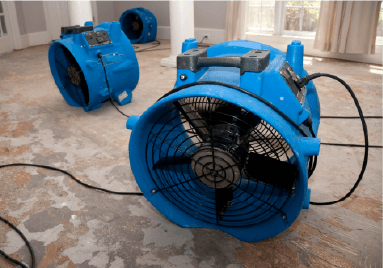
Water-damage restoration often involves two linked tasks: extracting accessible water where present and drying residual moisture in affected materials. Extraction can remove standing water and some retained water from suitable wet materials; it does not by itself verify that those materials are dry. A surface can feel dry to the touch while deeper layers of drywall, flooring, framing, or insulation still hold moisture.
Understanding the difference between water extraction and structural drying helps you ask better questions, follow the progress of the work, and understand why a restoration plan takes the time it takes.
What water extraction does
Water extraction is the removal of accessible, standing water from the affected areas. This is the first physical step after the source is controlled and the area is safe to enter. Extraction equipment pulls the bulk water off floors and out of low spots so the drying stage can actually reach the moisture trapped in materials.
Extraction can also pull some retained water from suitable wet materials, but it does not by itself verify that those materials are dry. It clears the bulk water so drying equipment can focus on the moisture absorbed into drywall, wood framing, subfloors, insulation, and other building assemblies.
What structural drying does
Structural drying addresses the residual moisture left in salvageable building materials after extraction. Airflow from air movers supports evaporation from wet surfaces, while dehumidifiers remove the moisture that enters the air. Equipment is selected to suit the materials, extent, and conditions so affected assemblies can return toward an appropriate moisture content and mold growth is less likely before repairs proceed.
A key point: a wall or floor that feels dry on the surface is not necessarily dry inside. Moisture meters and monitoring equipment are used to check moisture at the surface and at depth, because the hidden moisture is what causes secondary damage if it is left behind.
Extraction and drying compared
| Water Extraction | Structural Drying | |
|---|---|---|
| Goal | Remove bulk and extractable water | Remove moisture trapped in building materials |
| Typical equipment | Extraction units, pumps, wet vacs | Air movers, dehumidifiers, monitoring tools |
| How progress is checked | Assess remaining water and moisture | Moisture readings trend toward target over time |
| What it does not do | Does not dry materials inside walls or floors | Does not remove bulk standing water on its own |
How the process works together
After the source is controlled and the area is safe, the affected materials are assessed to understand how wet they are and how far the moisture has spread. Standing water is then extracted, and suitable drying equipment is set up and monitored over the following days. Readings are taken at intervals to confirm the materials are trending dry rather than holding moisture.
Drying time varies based on the materials involved, the extent of the water, how much access the equipment has to the wet assemblies, whether the moisture source has been fully stopped, and the conditions inside the property. There is no fixed number of days that applies to every loss. Measurements and assessment inform the decision that drying is complete — not a preset schedule.
Not every material can be saved. Whether a material is dried in place or removed depends on contamination, the condition of the material, access, and whether it can be effectively cleaned and dried — not on moisture readings alone, and not on a guarantee that everything can be restored in place.
Questions worth asking
During a water damage restoration project, a few practical questions help you follow the work:
- Which materials are affected, and how far has the moisture spread?
- What exactly is being monitored, and what readings are you tracking?
- What has to be removed, and why can it not be dried in place?
- When is the next moisture check, and what reading tells us drying is complete?
- Who repairs the source of the water?
Repairing the source vs. restoring the damage
A qualified plumber repairs the leak source itself — the broken pipe, failed supply line, or leaking fixture. SunCoast does not perform plumbing repairs. What SunCoast does is help locate hidden moisture through water leak detection when the source is unclear, then handle the extraction, drying, cleanup, and restoration of the resulting damage.
Separating these roles matters: drying the damage without fixing the source means the moisture can return, while fixing the source without drying the materials leaves hidden moisture behind. Both need attention.
Why prompt drying matters
The U.S. Environmental Protection Agency recommends addressing wet materials promptly and drying them within roughly 24 to 48 hours to help reduce the risk of mold growth. This is urgency guidance — it explains why fast action matters, not a promise that every structure can fully dry within that window. Drying time still depends on the materials, extent, access, and conditions described above. For context on moisture assessment, see the EPA guide to mold and moisture in homes and the EPA guidance on moisture assessment and drying.
How SunCoast can help
SunCoast Restoration is based in Oceanside and provides water extraction, structural drying, water-damage cleanup, and restoration for homes and businesses across our service areas. Call with the address and a short description of what happened so the team can confirm availability and the appropriate next step.
Call (619) 650-4460 to request a free, no-obligation assessment. SunCoast explains the proposed restoration work; your insurer determines coverage.
Call (619) 650-4460General information only. Follow local emergency instructions and consult your insurer about your policy.